
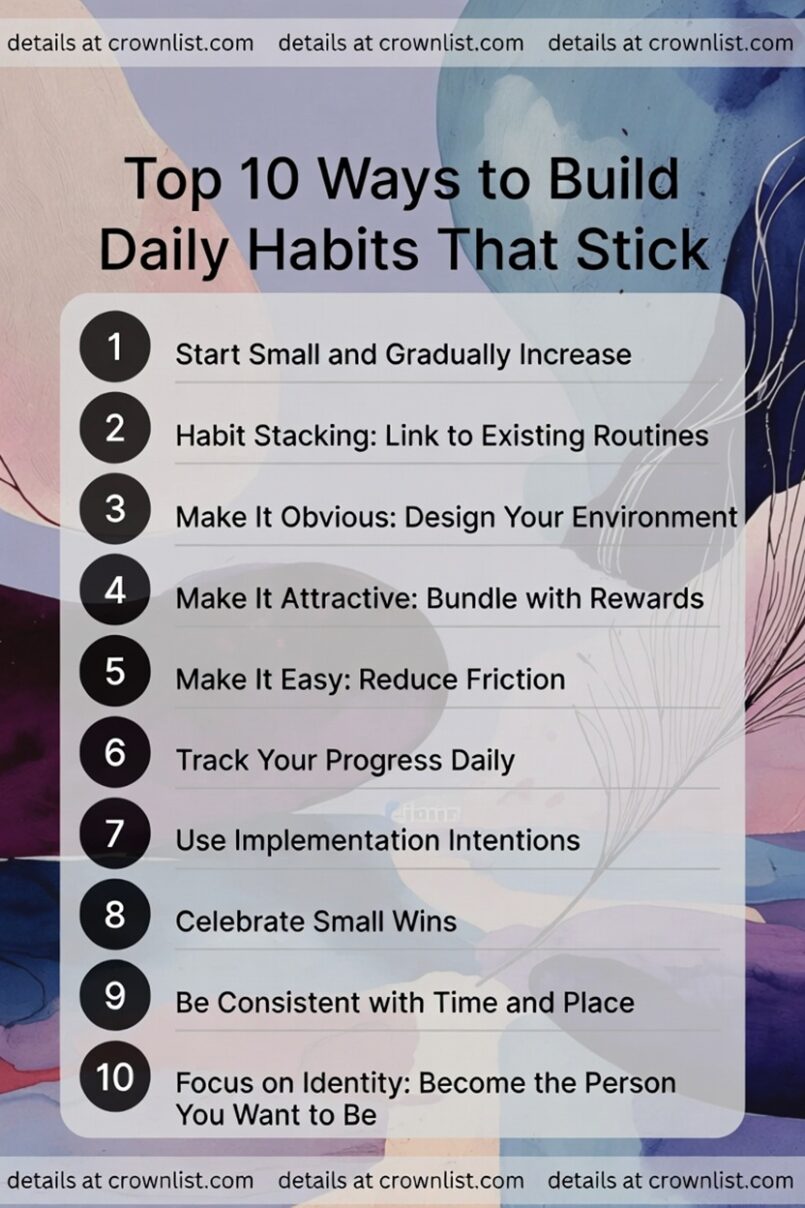
1. Start Small and Gradually Increase
Beginning with tiny, almost effortless actions lowers the barrier to entry and reduces overwhelm. By starting small, you build early wins that create momentum and confidence, making it easier to gradually increase the intensity or duration of the habit over time without triggering resistance.
2. Habit Stacking: Link to Existing Routines
Attaching a new habit to an already established routine (like meditating right after brushing your teeth) leverages existing cues in your day. This “stacking” method uses the reliability of current behaviors as triggers, making the new habit more automatic and less reliant on fleeting motivation.
3. Make It Obvious: Design Your Environment
Intentionally arranging your surroundings to cue the desired behavior (e.g., placing running shoes by the door) increases the likelihood you’ll act on it. By making good habits visible and bad habits invisible, you reduce decision fatigue and rely on environmental prompts instead of willpower alone.
4. Make It Attractive: Bundle with Rewards
Pairing a habit you need to do with something you enjoy (temptation bundling) hijacks your brain’s reward system. This dopamine-driven association makes the habit more appealing, turning something neutral or difficult into an activity you actually look forward to performing.
5. Make It Easy: Reduce Friction
The less effort a habit requires, the more likely you are to do it. By simplifying the process—preparing tools in advance, minimizing steps, or using the two-minute rule—you overcome inertia and make starting so effortless that procrastination has little room to take hold.
6. Track Your Progress Daily
Visually marking each day you complete a habit (with a calendar, app, or journal) creates a chain you won’t want to break. Tracking provides immediate feedback, reinforces your commitment, and turns consistency into a rewarding game that sustains long-term adherence.
7. Use Implementation Intentions
Planning exactly when, where, and how you’ll perform a habit (“If it’s 7 a.m., then I will meditate for 5 minutes in the living room”) bridges the gap between intention and action. This specific “if-then” strategy prepares your brain in advance and dramatically increases follow-through.
8. Celebrate Small Wins
Acknowledging and emotionally rewarding yourself after completing a habit—however small—releases dopamine and strengthens the neural pathways associated with the behavior. Positive reinforcement makes the habit feel satisfying, encouraging your brain to repeat it in the future.
9. Be Consistent with Time and Place
Performing the habit at the same time and in the same location every day builds strong contextual cues. Consistency in context helps your brain shift into autopilot mode faster, reducing reliance on motivation and turning the behavior into an automatic part of your daily rhythm.
10. Focus on Identity: Become the Person You Want to Be
Shifting your focus from outcome-based goals to identity-based habits (“I’m a healthy person” instead of “I want to lose weight”) creates lasting change. When the habit becomes part of who you believe you are, your actions naturally align with that identity, making the behavior sustainable for life.