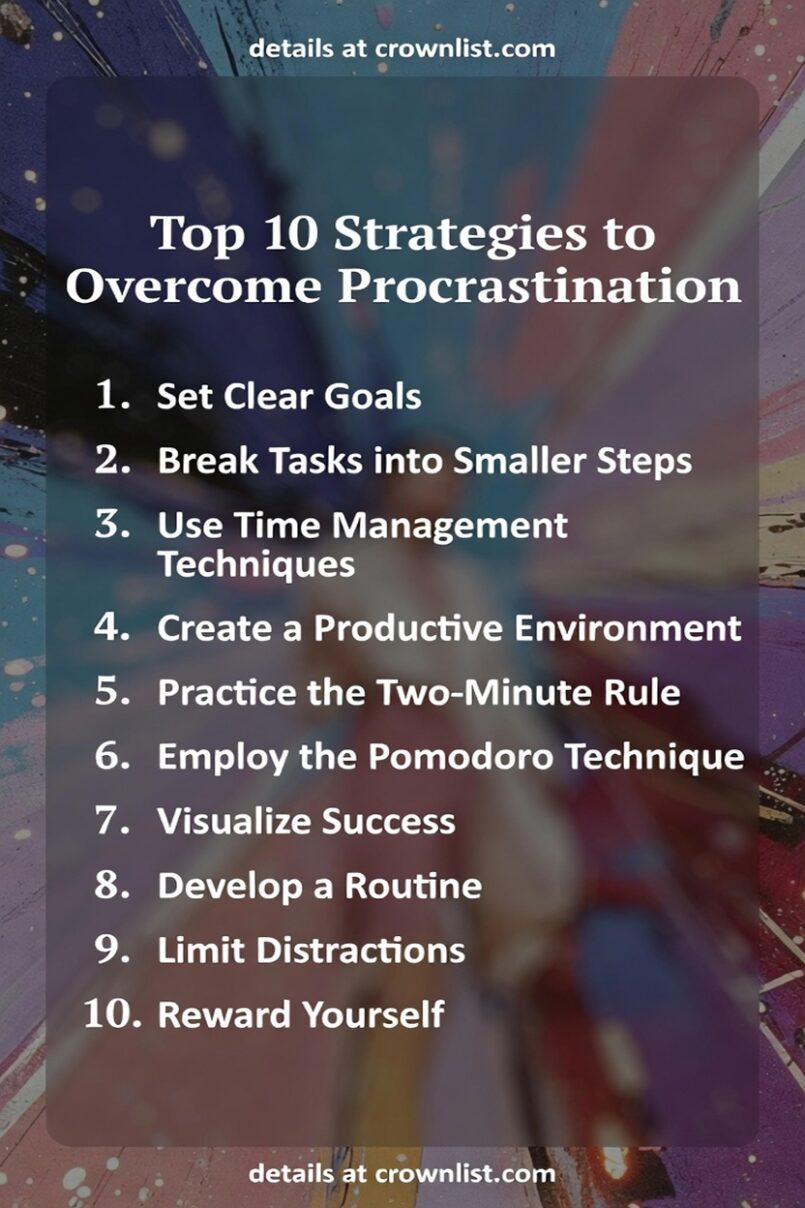
1. Set Clear, Specific Goals
Having vague intentions like “work on my project” often leads to procrastination because the brain struggles with ambiguity and lacks direction. Clear, specific goals (e.g., “write 500 words on the introduction by 10 AM”) provide focus, create a sense of urgency, and make progress measurable, reducing the mental resistance that causes delay.
2. Break Tasks into Smaller Steps
Large tasks feel overwhelming, triggering avoidance as a protective response to perceived stress or failure. Breaking them down into tiny, achievable actions lowers the activation energy required to start, builds quick wins and momentum, and tricks the brain into continuing once motion begins.
3. Use Time Management Techniques
Techniques like time-blocking or scheduling dedicated slots prevent open-ended “whenever” thinking that invites endless postponement. By assigning specific times to tasks, you create external structure, reduce decision fatigue, and leverage the psychological power of committed time to combat distraction and indecision.
4. Create a Productive Environment
Your surroundings heavily influence behavior—clutter, notifications, or tempting distractions signal the brain to escape into easier activities. Designing a dedicated, distraction-minimized workspace cues focus mode, minimizes cues for procrastination, and makes productive action the path of least resistance.
5. Practice the Two-Minute Rule
If a task takes less than two minutes, do it immediately instead of adding it to a list where it can linger and grow mentally heavier. This rule prevents small items from piling up into intimidating backlogs, provides instant gratification through completion, and builds a habit of immediate action that spills over to larger tasks.
6. Employ the Pomodoro Technique
Working in short, focused bursts (typically 25 minutes) followed by breaks combats the fatigue and boredom that fuel procrastination. The timer creates urgency and a defined endpoint, making starting feel less daunting, while regular breaks prevent burnout and maintain higher overall energy and motivation.
7. Visualize Success
Procrastination often stems from focusing on effort or potential discomfort rather than rewards. Vividly imagining the positive outcomes—relief, pride, or benefits after completion—shifts emotional association from negative to positive, boosts intrinsic motivation, and makes the future reward feel more tangible and worth pursuing now.
8. Develop a Consistent Routine
Relying on willpower alone is unreliable because motivation fluctuates. Building daily habits and rituals around key tasks automates behavior, reduces reliance on fleeting motivation, and turns productivity into a default mode rather than a constant internal battle.
9. Limit Distractions
Notifications, social media, and multitasking fragment attention and provide easy escape routes when discomfort arises. Actively eliminating or silencing these interruptions (e.g., app blockers, phone in another room) preserves focus, removes temptation, and forces the brain to engage with the task instead of fleeing to dopamine hits.
10. Reward Yourself
The brain procrastinates partly because immediate pleasures (scrolling, snacks) outcompete delayed rewards. Intentionally pairing task completion with small, enjoyable rewards creates positive reinforcement, conditions the mind to associate work with pleasure, and makes follow-through more appealing over time.