1. Observe Facial Expressions
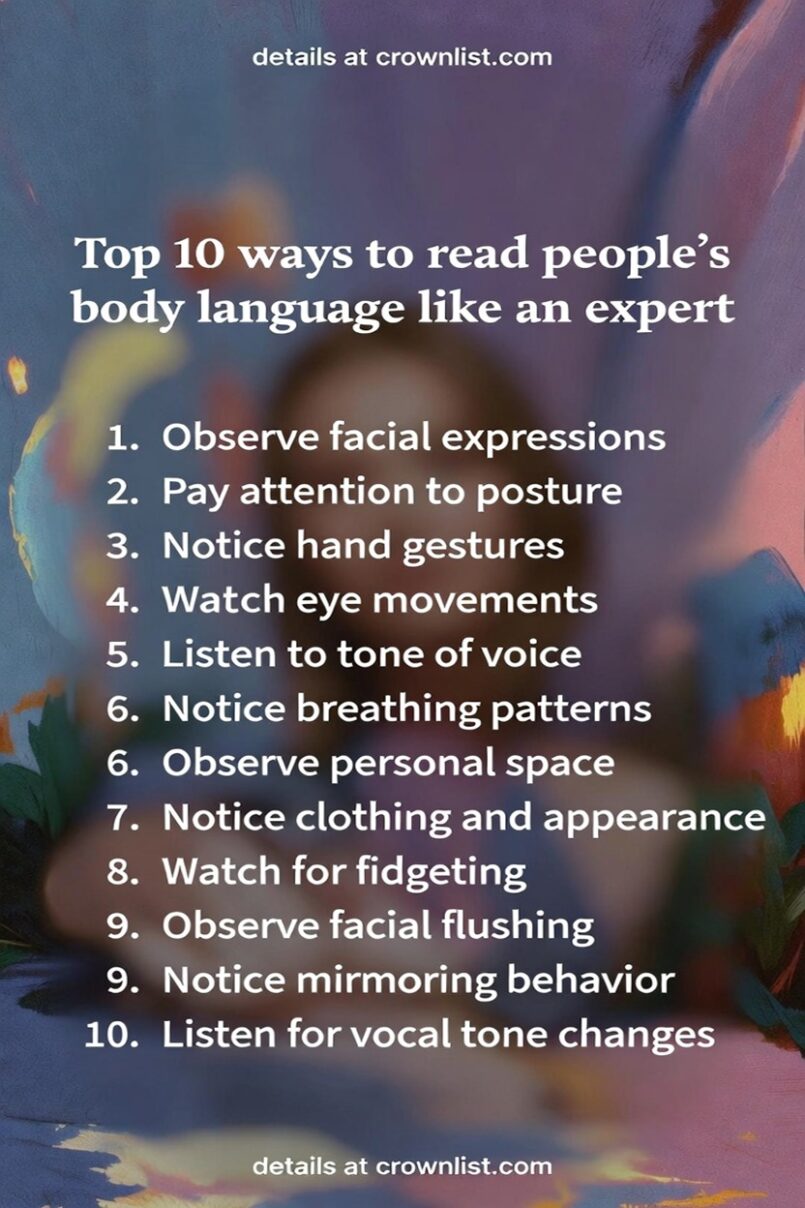
Facial expressions are the most immediate and universal indicators of emotion. Microexpressions—fleeting flashes lasting less than a second—often reveal true feelings before a person can mask them. By training yourself to spot subtle changes in the eyebrows, eyes, mouth, and forehead, you can detect genuine emotions like surprise, disgust, fear, or happiness, even when someone is trying to hide them.
2. Pay Attention to Posture
Posture reveals a person’s confidence, openness, and emotional state. An upright, open posture with shoulders back signals confidence and engagement, while slouched shoulders or crossed arms often indicate defensiveness, insecurity, or discomfort. Observing how someone holds their body gives you insight into their attitude toward you and the situation.
3. Notice Hand Gestures
Hands are highly expressive and often betray what words conceal. Open palms suggest honesty and openness, while hidden hands or clenched fists can signal deceit or tension. Illustrative gestures that match spoken words reinforce truthfulness, whereas mismatched or excessive gesturing may indicate nervousness or exaggeration.
4. Watch Eye Movements
Eyes are powerful communicators of interest, honesty, and cognitive processing. Sustained eye contact typically shows confidence and engagement, while frequent breaking of eye contact might suggest discomfort or deception. Pupil dilation can indicate attraction or arousal, and specific gaze directions may hint at whether someone is recalling memories or constructing thoughts.
5. Listen to Tone of Voice
The way something is said often matters more than the words themselves. Variations in pitch, speed, volume, and inflection convey emotions like sarcasm, excitement, anger, or uncertainty. A steady, calm tone usually signals confidence, while a rising pitch at the end of statements can indicate nervousness or seeking approval.
6. Notice Breathing Patterns
Breathing is largely subconscious and reveals emotional and physiological states. Shallow, rapid breathing often accompanies anxiety, stress, or excitement, while slow, deep breaths suggest calmness and control. Sudden changes in breathing rhythm can signal emotional shifts or reactions to what’s being said.
7. Observe Personal Space
How close someone stands or sits reflects their comfort level and relationship to you. Respecting or invading personal space (proxemics) communicates dominance, intimacy, or aggression. People who feel threatened may increase distance, while those who are comfortable or attracted often close the gap subtly.
8. Watch for Fidgeting
Fidgeting—tapping feet, playing with objects, or touching face/hair—usually indicates nervousness, impatience, or discomfort. Excessive self-soothing behaviors (like rubbing hands or neck) are pacifying actions the brain uses to calm stress, providing clear clues that something is making the person uneasy.
9. Observe Facial Flushing or Blushing
Changes in skin color, especially in the face, neck, or ears, are involuntary responses tied to emotion. Blushing often signals embarrassment, shame, or attraction, while sudden pallor can indicate fear or shock. These autonomic reactions are difficult to control and offer honest windows into inner feelings.
10. Notice Mirroring Behavior
When people subconsciously mimic each other’s posture, gestures, or speech patterns, it signals rapport and liking. Lack of mirroring in a conversation may indicate disinterest or disagreement. Spotting whether someone is naturally syncing with you helps gauge their level of connection and comfort.